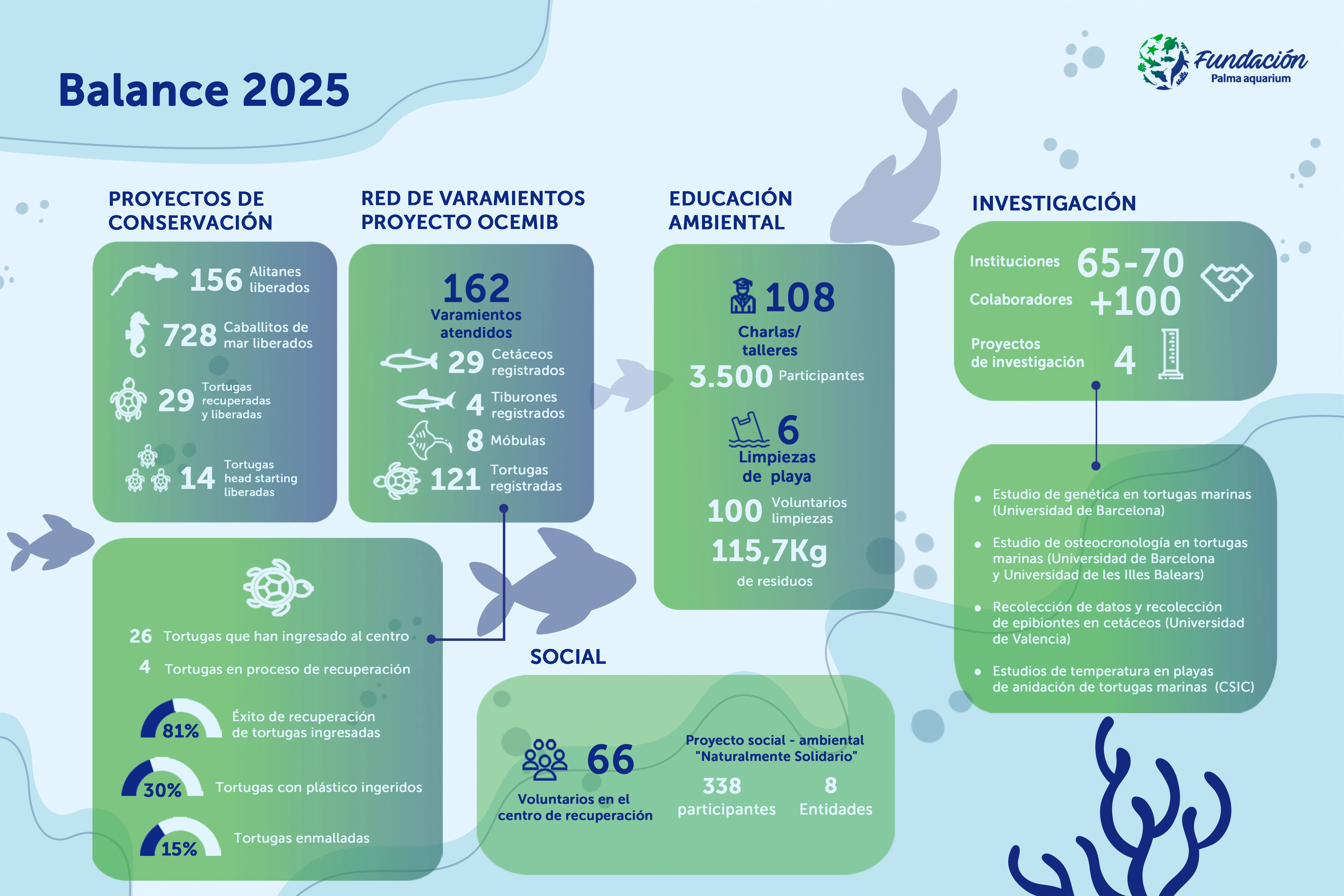
The Palma Aquarium Foundation ended 2025 on an extremely positive note, consolidating its position at the forefront of marine life conservation in the Balearic Sea, and as a benchmark institution for scientific research and environmental education. The Foundation’s work is centred on protecting vulnerable species, responding to stranding incidents and raising citizen awareness.
Marine conservation projects
Throughout 2025, the Palma Aquarium Foundation worked intensively on a number of conservation projects:
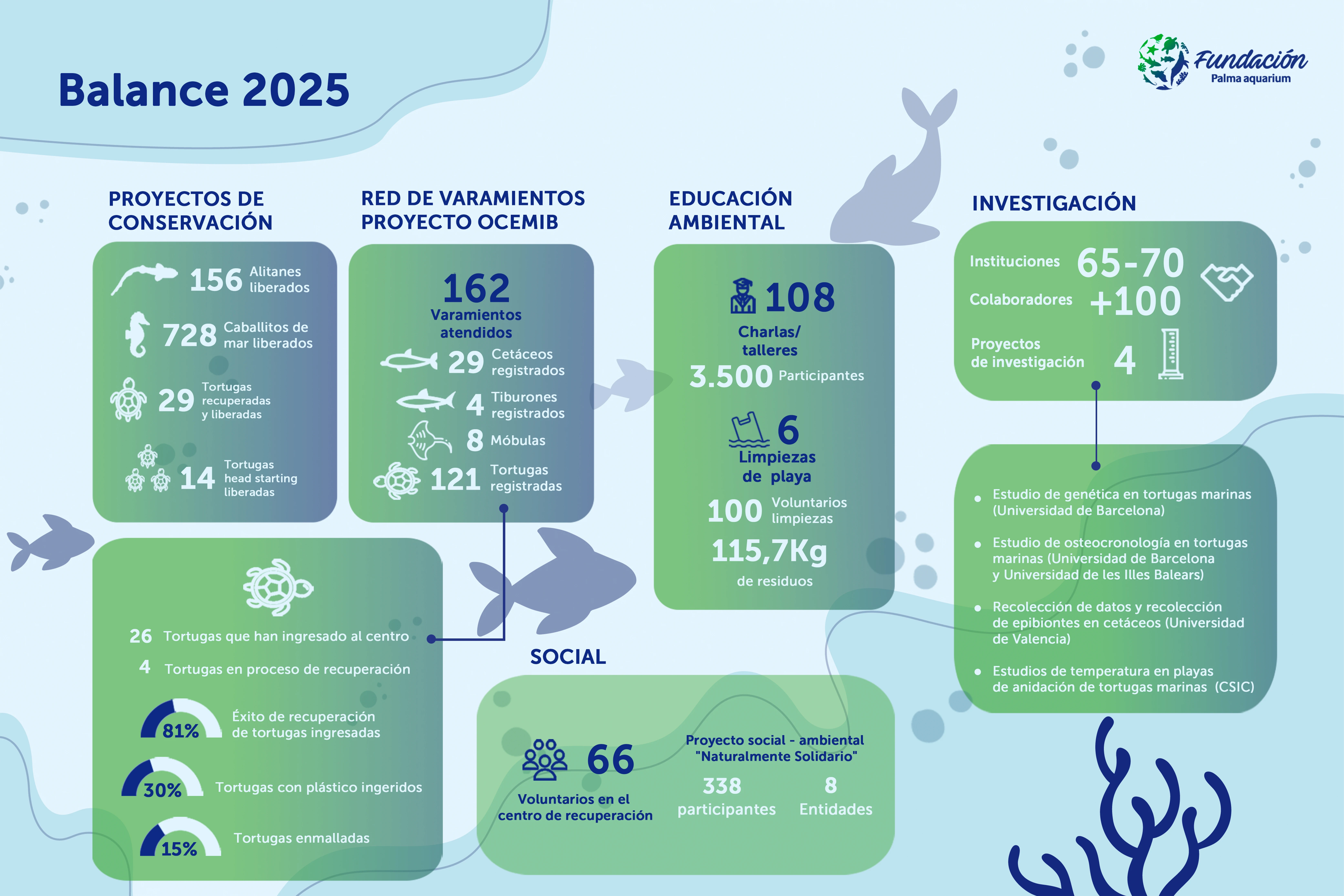
Thanks to the Petits Taurons – Acció Stellaris project, 156 nursehound sharks were released into the Balearic Sea, providing a boost for populations of this species, which is listed as endangered in the Red Book of Fish of the Balearic Islands.
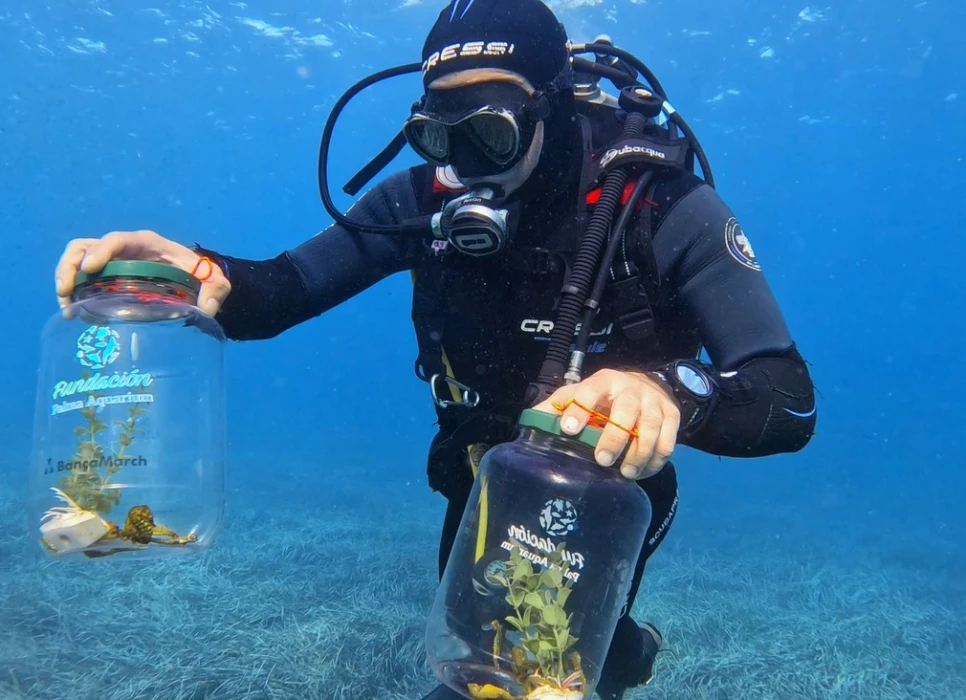
In turn, the Cavallets de Mar Balears project successfully released 728 seahorses, adding to the population of this particularly vulnerable Mediterranean species.
Finally, through the Head Starting programme, 14 sea turtles were released, following their rearing and development in a controlled environment, considerably increasing their chances of survival in the natural environment.
The Stranding Network and the OCEMIB Project
The OCEMIB Project has been a key component in supporting the marine life stranding network in the Balearic Islands. In 2025, 162 animals were registered, including 29 cetaceans, 4 sharks, 8 mobula rays and 121 sea turtles.
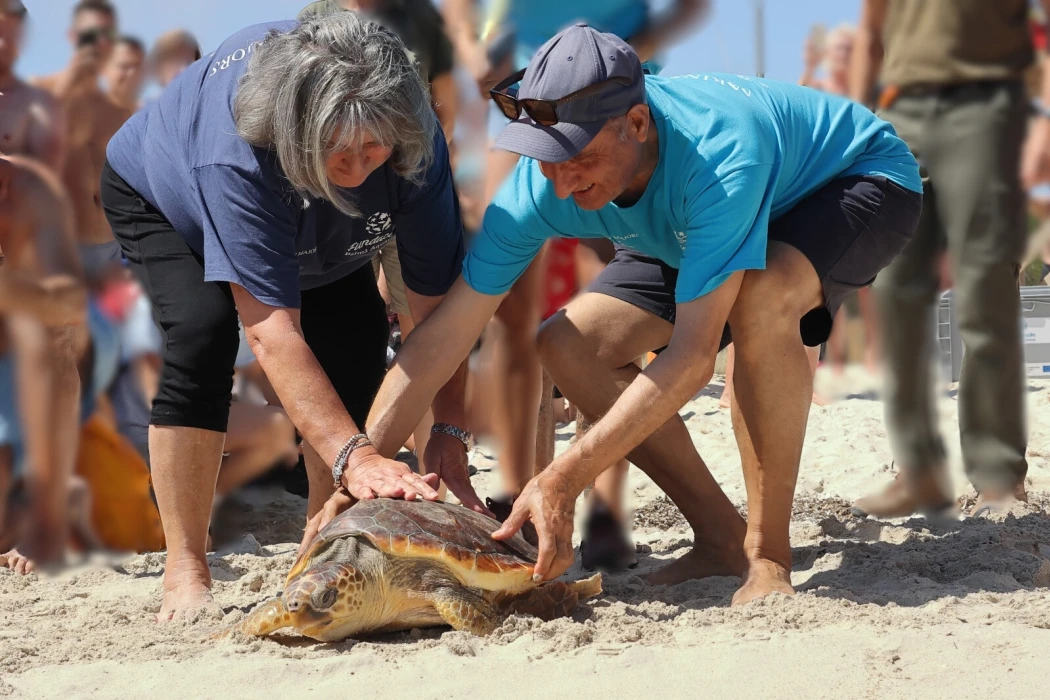
Twenty-six of the turtles were admitted to the rescue centre, with a recovery rate of 81%. Over the course of the year, 29 sea turtles were released back into the sea (11 rescued in 2024 and 18 in 2025), while a further 4 remain in rehabilitation.
The data collected reflect the main threats to these species: 30% of the turtles were found to have ingested plastic, and 15% were entangled in fishing nets. There were also cases of bycatch, vessel strikes and other causes, highlighting the urgent need to continue working on prevention and raising citizen awareness.
Scientific research and institutional collaboration
In 2025, the Palma Aquarium Foundation worked with between 65 and 70 institutions and over a hundred collaborators, participating in major scientific projects such as genetic and skeletochronological studies in sea turtles, research into cetacean epibionts and temperature monitoring at nesting beaches, in partnership with universities and research centres including the University of Barcelona, the University of the Balearic Islands, the University of Valencia and the Spanish National Research Council (CSIC).
Environmental education and community action
Environmental education and social engagement are also fundamental pillars of the Foundation’s work. In 2025, 108 talks and workshops were delivered, attracting more than 3,500 participants.
Six beach clean-ups were also held, with more than a hundred volunteers collecting over 115 kg of waste, sending out a powerful message, highlighting the fact that protecting our coasts is a responsibility we all share.
In addition, the Naturalmente Solidario social project enabled 338 people from 8 social organisations to benefit from environmental education activities and direct contact with the marine environment.
Looking ahead to the future
Thanks to these achievements, the Palma Aquarium Foundation has reaffirmed its commitment to marine life conservation, scientific research and environmental education. The Foundation intends to continue generating knowledge, protecting the most vulnerable species and driving a collective awareness that guarantees the long-term health of the Balearic Sea’s marine ecosystems.

 Plan your visit